
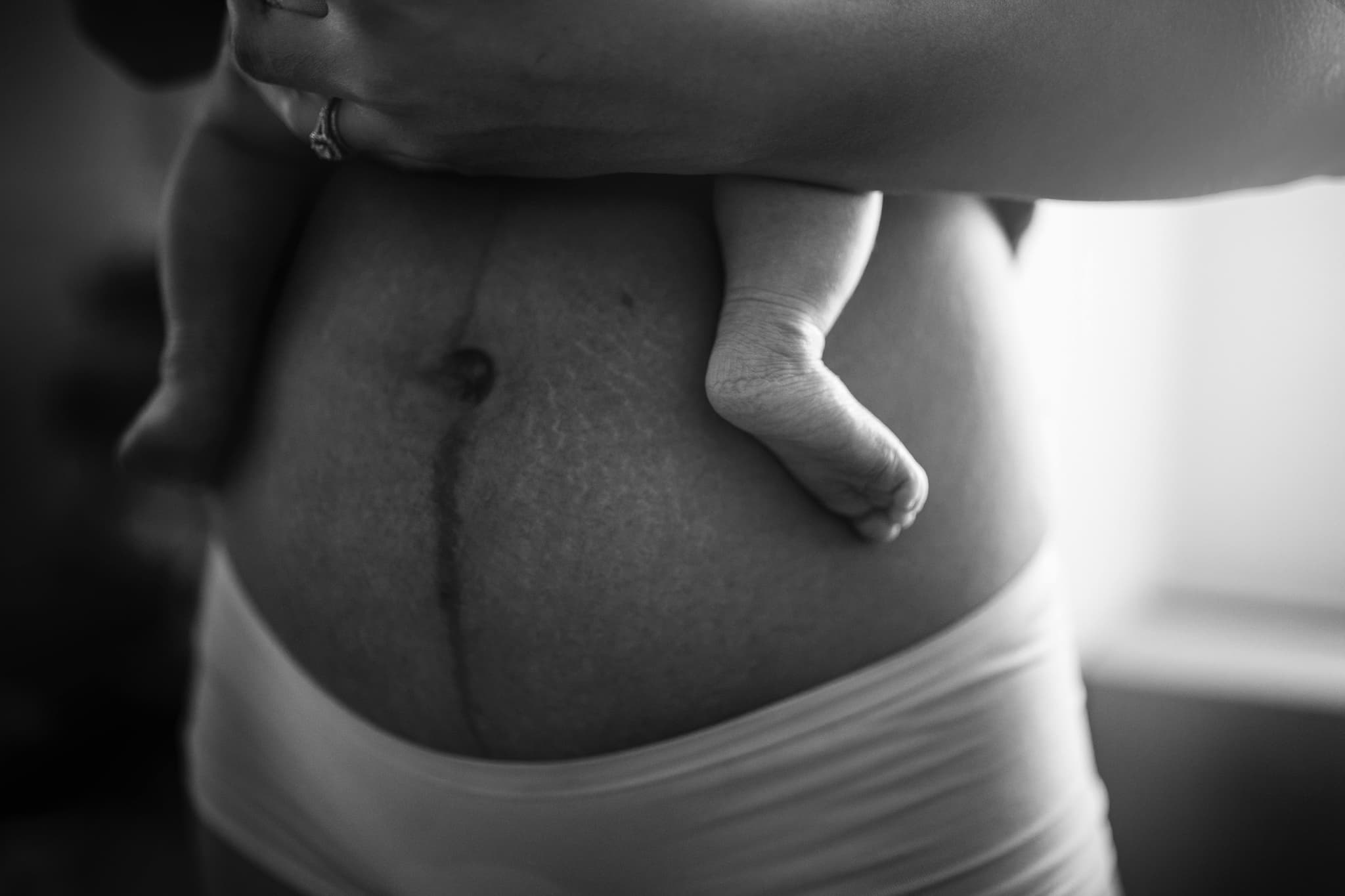
Anatomy of a C-Section Scar
When you think about the aftermath of a C-section, your focus is naturally on the beautiful new life you've brought into the world. But there's also a new addition to your body's landscape -- a C-section scar. This mark is a physical narrative of your baby's entry into the world, and like any story, it has its own journey.
What Exactly is a C-Section Scar?
A C-section scar is the body's memento of where your surgeon carefully made the incision to deliver your child. It starts as a wound, which then transforms into a permanent mark located just above the bikini line. The scar's look and feel can range from a thin, pale line to a thicker, darker mark, largely depending on your skin's pigmentation and your body's unique healing abilities.
The Journey of Healing: How Scars Take Shape
Let's unravel the mystery of how your body goes from incision to scar:
- The Immediate Response: As soon as the C-section is complete, your body jumps into action, triggering an inflammatory response. This is your immune system's front-line defense, working to clean the wound and fend off any unwanted bacteria. It's normal during this stage to notice some redness and swelling -- and yes, a bit of itchiness is part of the package deal.
- Building the Bridge: Next, your body enters what's called the proliferative phase. Collagen -- the protein responsible for the toughness of our skin -- comes into play, forming new tissue and a bridge over the gap. As this new tissue forms, you might feel a pull or itch, signaling that everything is moving along just as it should.
- The Final Touch: The last phase is the maturation phase, where the scar really comes into its own. It can take months or even a couple of years, but slowly and surely, the scar becomes softer, paler, and usually, less itchy. It's during this time that the nerves are healing too, which can sometimes lead to a tingling sensation or occasional itch.
Reasons for C-Section Scar Itch

If you're experiencing a C-section scar itch, you're not alone. Here's the lowdown on why your scar might be more bothersome than your toddler at bedtime.
It's Just a Phase: Normal Healing and Tissue Regeneration
Your body is a remarkable healing machine. During the healing phase, it's working overtime to regenerate tissue. Picture your skin as a busy construction site -- cells are hustling, collagen is being laid down, and everything is bustling. That activity underneath the surface can translate to itchiness on top.
The Comeback of Nerves: Nerve Regeneration and Sensitivity
During a C-section, nerves are disrupted, and as they regenerate, they can send out little electrical zings of sensation. It's like they're waking up after a long nap -- a bit confused and very chatty. This can cause a range of sensations from tingling to full-on itchiness.
The Body's Alarm System: Inflammatory Response in Healing Tissue
Inflammation is your body's alarm system that signals it's fixing an injury. It's a good thing, but it can make the skin around your scar feel like it's on high alert, causing the area to be itchy as your immune system works in overdrive to heal the wound.
When Your Skin Feels the Stretch: Dryness and Stretching of the Skin Around the Scar
Your scar is in an area that moves a lot -- every time you twist, sit, or even laugh. This can cause the skin to stretch and, sometimes, become dry. Dry skin is itchy skin, and when coupled with the stretching from everyday movements, it can make you want to scratch like you've got a case of chickenpox.
Understanding the reasons behind the itch can help you feel more in control. It's a normal part of the healing process, a sign that your body is doing exactly what it should be post-C-section.
When C-Section Scar Itch May Be a Concern

While itching can be a benign sidekick of healing, sometimes it's the body's signal that something needs more attention.
Red Flags: Signs of Infection or Complications
If your scar is increasingly red, swelling beyond what it was, or oozing, it could signal an infection. Fever or increased pain accompanying the itch are also warning signs that warrant a call to your doctor.
The Unwanted Reaction: Allergic Reactions to Materials
Materials used during or after your surgery can cause reactions. If you're experiencing a widespread rash, swelling, or relentless itching, it might be an allergic reaction to sutures, dressings, or topical ointments.
The Overachievers: Keloid or Hypertrophic Scarring
Sometimes, scars can be overachievers, growing bigger and itchier than typical scars. These are known as keloid or hypertrophic scars and can be itchy due to the excess scar tissue. If your scar is raised and the itch is intense, it's time to talk to a dermatologist.
Managing C-Section Scar Itchiness in the Short Term
Gentle Tactics: Safe Ways to Alleviate Itching
Light tapping or patting around the scar can trick your nerves into settling down for a bit. Moisturizing can also be a game-changer -- just make sure the lotion or cream is gentle and fragrance-free to avoid irritation.
Over-the-Counter Allies: Products That Can Help
Hydrocortisone cream can be a good option for mild itches, and antihistamines can help if the itch is due to an allergic response. Always get guidance from your healthcare provider before adding new products to your routine.
Home Remedy Haven: What Might Provide Relief
- Aloe vera -- like a cool breeze on irritated skin
- Oatmeal baths -- soothe itchy skin beyond breakfast
- Chamomile tea compresses -- gentle anti-inflammatory relief
Long-Term Care and Prevention
Scar Care 101: Tips to Prevent Long-Term Itching
Regular, gentle cleaning and careful monitoring of your scar can prevent complications that lead to itching. Use a mild soap and pat the area dry -- no rubbing.
The Hydration Station: Importance of Moisturizing
Keeping your skin hydrated is like giving your scar a drink of water. Use fragrance-free, hypoallergenic moisturizers to keep the skin supple and less prone to itchiness.
The Minimizers: Scar Reduction Products
There are products designed to minimize scarring -- from silicone sheets to gels that reduce scar thickness and coloration. By keeping the scar tissue flat and smooth, these can also help reduce itchiness.
Medical Treatments and Interventions
Doctor's Orders: When to Seek Medical Advice
If your itch isn't quelled by home remedies or over-the-counter products, or if it's worsening, it's time to consult your doctor. Persistent itchiness could be a sign that something more is at play.
Scratching Below the Surface: Medical Treatments
There are medical treatments available for persistent itching, ranging from prescription creams to oral medications. In some cases, light therapy or corticosteroid injections might be offered.
Expert Maneuvers: Professional Scar Management
Dermatologists can offer treatments such as laser therapy, microneedling, or scar revision, which can reduce itching by improving the overall condition of the scar tissue. At Next OV Skin, our C-Section Scar Recovery program combines laser remodeling with holistic healing protocols tailored to postpartum skin.